National Historical Museum Athens: Hours, Tickets, and What to See

National Historical Museum Athens: Hours, Tickets, and What to See

Visitor guide to the National Historical Museum in Athens, located in the Old Parliament building and showcasing 300 years of modern Greek history.

Published: June 13, 2024 | Updated: September 27, 2026•By Pavlos Inglesis•14 min read•
AthensGreece

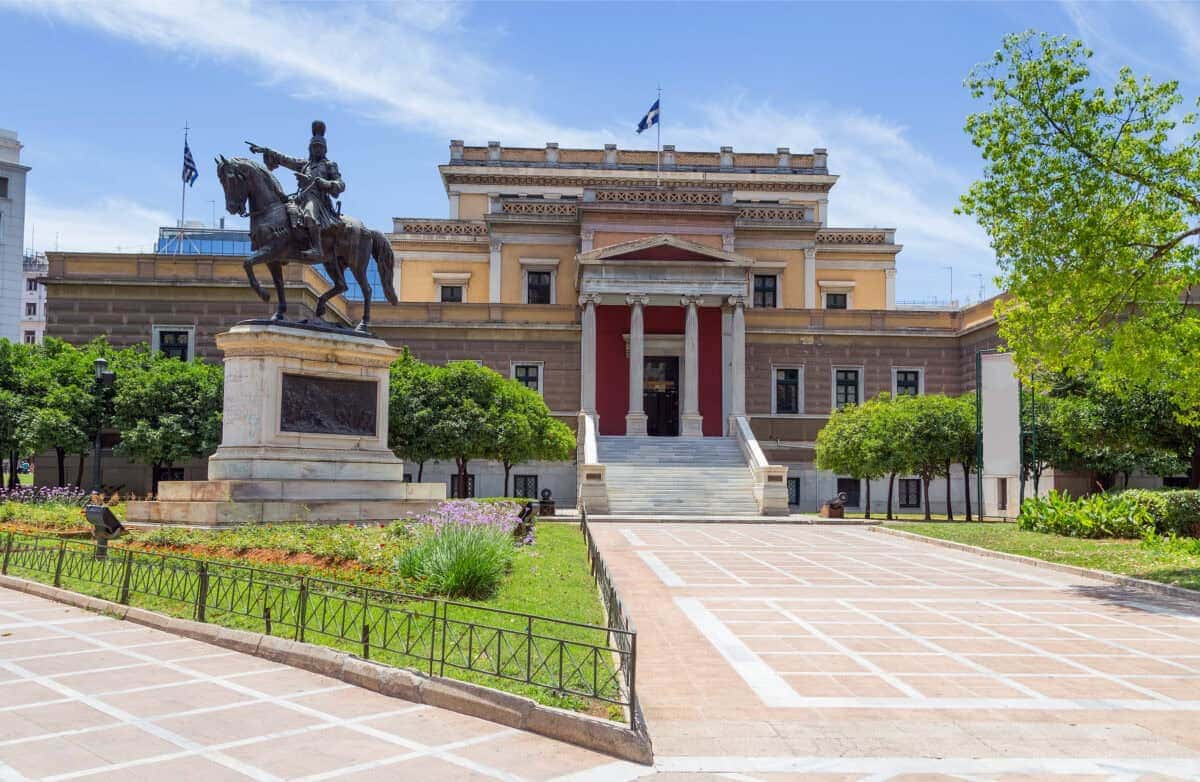
The National Historical Museum of Athens sits inside the neoclassical Old Parliament building on Stadiou Street, a five-minute walk from Syntagma Square. Unlike the Acropolis Museum, which focuses on antiquity, it covers the last 300 years of modern Greek history, with the heaviest focus on the 1821 War of Independence against the Ottoman Empire. It is an essential, uncrowded stop for understanding how modern Greece was formed.

✔ Data confidence: Source — National Historical Museum, official visitor information (nhmuseum.gr). Last verified: May 2026. Confidence level: High.

A walkthrough of the National Historical Museum, filmed inside the Old Parliament building in central Athens.
The National Historical Museum of Athens in the neoclassical Old Parliament building on Stadiou Street
The National Historical Museum is housed in the Old Parliament building on Stadiou Street, downtown Athens — a five-minute walk from Syntagma Square.
BEST ACROPOLIS TICKET & TOUR:Athens Parthenon & Acropolis Guided Tour

National Historical Museum Athens: Hours, Tickets & Location (2026)

The National Historical Museum is open Tuesday to Sunday and closed on Mondays. A standard ticket to the permanent exhibition costs €10 (€5 reduced), and the museum is small enough to see comfortably in 1.5 to 2 hours. Here are the verified visitor details at a glance.

LocationOld Parliament Building, 13 Stadiou Street, 10561 Athens (5-min walk from Syntagma Square)
Opening hours (Sept–June)Tue–Fri 09:00–16:00; Sat–Sun 10:00–16:00
Opening hours (July–Aug)Tue–Sun 10:00–16:00
Last admission15:30
ClosedMondays (also Dec 25–26, Jan 1 & 6, Easter Sunday, May 1, Aug 15)
Standard ticket€10 (permanent exhibition)
Reduced ticket€5 (visitors 65+, students, groups of 15+)
Combined ticket€15 / €8 reduced (permanent + temporary exhibitions)
Family ticket€15 permanent / €20 combined (2 adults + 3 children)
Free admission1st Sunday of the month (Nov–Feb), plus March 25, May 18 & October 28
Time needed1.5–2 hours
TicketsSold on-site only (no advance online booking — and rarely a queue)
National Historical Museum Athens visitor information, verified against nhmuseum.gr (May 2026).

How to Get to the National Historical Museum in Athens

  • By metro: Take the RED LINE (Line 2) or BLUE LINE (Line 3) to Syntagma Station (on Google Maps). The museum is a five-minute walk along Stadiou Street. The ATH.ENA Card covers public transport across Athens.
  • On foot: From Kolonaki, Koukaki, Syntagma, Monastiraki, Plaka or Thissio, it is a 15–20 minute walk to the museum.
  • Official website:nhmuseum.gr · Google Maps · Instagram
  • Guided tours: For wider Athens history tours, Get Your Guide lists hundreds of options you can book online.
Athens metro map showing Syntagma station, the stop for the National Historical Museum
Athens metro map: for the National Historical Museum, get off at “Syntagma” on the red (Line 2) or blue (Line 3) line.

READ ALSO:

Best Things to Do in Athens
National Archaeological Museum: Complete Guide
Acropolis Tickets: Best Tips and Options
Where to Stay in Athens
Best Greek Islands Near Athens

What Is the National Historical Museum of Athens?

The National Historical Museum holds the collections of the Historical and Ethnological Society of Greece, founded in 1882. Its exhibits trace Greek history from the fall of Constantinople in 1453 to the Second World War, with a strong emphasis on the 1821 Greek War of Independence and the establishment of the modern Greek state.

The neoclassical building — the Old Parliament — was designed by French architect François Boulanger and built between 1858 and 1875. It served as the Greek Parliament until 1935; the Society took over the building in 1960, and the permanent exhibition opened to the public in 1962.

For visitors, this is the value of the museum: it shows a different Greece from the ancient world of the Acropolis or Delphi. These are the people, battles and decisions that shaped the country over the last 300 years — the modern history that Greeks study in school alongside the ancient era.

Facade of the National Historical Museum at Kolokotroni Square in central Athens
The museum stands in the heart of Athens on Stadiou Street, at Kolokotroni Square.
The Old Parliament House of Greece, now home to the National Historical Museum in Athens
The building itself is the Old Parliament of Greece — a piece of history before you even step inside.

There are rarely queues here. You will not need to book in advance — simply walk to the ticket desk at the entrance, pay, and collect your printed ticket.

Street view of the National Historical Museum, a five-minute walk from Syntagma Square
The museum is a five-minute walk from Syntagma Square.
Bronze cannons from the 1800s displayed outside the National Historical Museum Athens
Cannons and cannonballs from the 1800s line the entrance, just outside the museum.
Ticket desk at the entrance of the National Historical Museum in Athens
The ticket desk sits just inside the entrance.
Paper admission ticket for the National Historical Museum Athens, priced at 10 euros
Tickets are sold on-site only — there is no online booking, and rarely a need for one.

The Temporary Exhibition

The museum runs a temporary exhibition that changes every few years. It sits near the entrance, to the left and right of the ticket desk. The current display focuses on the early 20th century — World War I, the 1922 Asia Minor Catastrophe and the destruction of Smyrna, and the refugee crisis that followed.

Temporary exhibition on early 20th-century Greek history near the museum entrance
To the right of the entrance, the temporary exhibition covers Greece’s recent history — WWI, the 1922 Smyrna catastrophe and the refugee crisis that followed.
Photographs documenting Greece's turbulent 20th century in the temporary exhibition
Greece’s turbulent 20th century, told through photographs and artefacts.
Artefacts and photographs from the early 1900s at the National Historical Museum Athens
Objects and photographs from the early 1900s fill the gallery.
Maps tracing the 1920 Greco-Turkish War campaign in Asia Minor
Maps showing the progress of the Greco-Turkish War in 1920.
Temporary exhibition gallery covering Greece's modern history
The temporary exhibition usually stays in place for a few years.
Historic photographs from Greece's early 20th-century wars in Asia Minor
Striking photographs from Greece’s wars of the early 20th century, mainly in Asia Minor.
Photograph of the destruction of Smyrna, modern Izmir, in 1922
The destruction of Smyrna (modern Izmir) in 1922.
Greek refugees arriving in mainland Greece after the 1922 Smyrna catastrophe
Thousands of refugees flooded mainland Greece after Smyrna’s destruction.
Display documenting the expulsion of Smyrna's Greek population in 1922
Smyrna’s entire Greek population — hundreds of thousands of people — was expelled within days.
Portrait of a hero of the Asia Minor campaign in the temporary exhibition
One of the figures honoured in the Asia Minor displays.

The Permanent Exhibition

The permanent exhibition is the heart of the museum, spread across the galleries that surround the old parliamentary chamber. It is organised around three themes: traditional Greek costumes, the 1821 Greek War of Independence, and the politics of the modern Greek state.

Traditional Greek Costumes

A whole section is devoted to traditional Greek costumes and clothing — garments worn not only for weddings, dances and special occasions, but in the daily lives of men, women and children across the regions of Greece.

Gallery of traditional Greek costumes at the National Historical Museum Athens
A large gallery is dedicated to traditional Greek clothing.
Regional traditional Greek costumes on display at the museum
Costumes vary widely from one region of Greece to another.
The variety of traditional Greek folk costumes from across Greece
The range of traditional Greek dress is astonishing.
Embroidered details of a traditional Greek costume
Fine embroidered detail on the costumes.
Decorated children's traditional Greek clothing on display
Children’s clothing was just as beautifully decorated.
Playmobil figures dressed in traditional Greek costumes
Playmobil figures wearing the traditional Greek costumes.
Playmobil figures in Greek folk dress, a popular museum exhibit
These have to be among the most charming exhibits in the museum.
Costumes paired with photographs of Greeks wearing them at weddings
Many items are paired with photographs of real people wearing the costumes, often for weddings.
Handmade towels and embroidered ornaments from a traditional Greek home
A typical Greek household drawer, filled with handmade towels and ornaments.
Children's traditional Greek costumes displayed at the museum
Children wore traditional clothing too.

The Greek War of Independence (1821)

The largest part of the museum is devoted to the 1821 Greek War of Independence against the Ottoman Empire. The galleries are filled with weapons, flags, clothing and portraits of the generals, admirals and ordinary fighters who took part in the struggle for independence.

The Greek War of Independence gallery, the museum's largest section
Around 80% of the exhibits relate to the 1821 War of Independence against the Ottoman Empire.
Greek Revolution flag bearing the motto Freedom or Death
The motto of the Greek Revolution, on almost every flag: “Freedom or Death”.
Portrait of admiral Konstantinos Kanaris, hero of the 1821 Greek Revolution
Konstantinos Kanaris, a Greek admiral and one of the key figures of the War of Independence, later became Prime Minister of Greece.
Portraits and Greek flags from the 1800s in the permanent exhibition
Hundreds of portraits of important figures, alongside Greek flags from the 1800s.
Traditional gallery interior of the National Historical Museum Athens
The museum has a traditional, old-school feel, with few modern or digital displays.
Portraits of Greek Revolution generals and admirals
Portraits of the generals and admirals of the Greek Revolution.
Battle flags carried during the 1821 Greek War of Independence
These flags were carried into the live battles of the 1800s.
Guns and memorabilia belonging to 1821 admirals and soldiers
Guns and memorabilia from 1821 admirals and soldiers.
Bilingual Greek and English labels beside the museum exhibits
Labels in both Greek and English explain each room and item.
Rigas Feraios's 1797 Charta map of Greek-inhabited lands
One of the most important maps in Greek history: the 1797 “Charta” by Rigas Feraios, drawn in Vienna to map the lands where Greeks lived — decades before Greece existed as a country.
Personal belongings of General Ioannis Makrygiannis
Clothing and personal items of Ioannis Makrygiannis, a military officer and political figure of the 1800s.
Weapons of the generals and admirals of the 1821 War of Independence
Armaments of senior figures, generals and admirals of the 1821 War of Independence.
Portrait of naval commander Laskarina Bouboulina
Laskarina Bouboulina, a Greek naval commander and one of the most important women of the War of Independence.
Museum walls covered with portraits and paintings of the Greek Revolution
The interior is covered with portraits and paintings of the figures and battles of 1821.
Corridor leading to a Playmobil diorama of the Siege of Missolonghi
Halfway through the museum, this corridor leads to another Playmobil installation on the right.
Playmobil diorama recreating the Siege of Missolonghi
A Playmobil diorama recreating the Siege of Missolonghi — a charming way to tell a hard story.
Portrait of Dionysios Solomos, who wrote the Greek national anthem
A portrait of Dionysios Solomos, the national poet of Greece, who wrote the Greek anthem.
Large copy of a Delacroix painting depicting the Greek War of Independence
A large copy of a famous Delacroix painting of the Greek War of Independence.

Modern Greece and 20th-Century Politics

Other galleries cover the turbulent first century of Greece as an independent state — from King Otto and the early monarchy to prime ministers such as Eleftherios Venizelos, and the wars of the early 1900s.

Chairs used by King Otto and Queen Amalia, Greece's first royals
Chairs used by Greece’s first king, Otto, and his wife Amalia, who came to Greece from Germany in 1832.
A piece of the former Greek royal boat on display
A piece of the former royal boat.
Statues of King Otto and Queen Amalia, Greece's first royals
Statues of King Otto and Queen Amalia, Greece’s first royal couple.
Throne and personal items of King Otto and Queen Amalia
The throne and personal items of Otto and Amalia.
Portrait of Prime Minister Eleftherios Venizelos
A portrait of Eleftherios Venizelos, Greek Prime Minister of the early 1900s — and the namesake of Athens International Airport.
Personal items and photographs of Eleftherios Venizelos
Personal items and photographs of Eleftherios Venizelos.
Mitre of the Patriarch from Smyrna, the city burned in 1922
The mitre of the Patriarch of Smyrna, the city destroyed in 1922.
Personal items of Ioannis Kapodistrias, first governor of modern Greece
Personal items of Ioannis Kapodistrias, the first governor of modern Greece.
Display case of artefacts from the Greek War of Independence
A display case of War of Independence artefacts.
Cannons and posters from World War I and World War II
Cannons and posters from World War I and World War II.
Memorabilia from WWI, the Balkan Wars and WWII
Memorabilia from WWI, the Balkan Wars and WWII.
Flags, photographs and furniture from Greece's first century of politics
Flags, photographs, statues and furniture from Greece’s first 100 years of politics.
Pocket watches owned by 19th-century Greek politicians
Pocket watches owned by Greek politicians of the 1800s.
Plaque from the tower clock Lord Elgin gave to the city of Athens
Perhaps the most ironic item in the museum: a plaque from a tower clock that Lord Elgin gifted to Athens after removing the Parthenon (Elgin) Marbles from the Acropolis.
Display about the tower clock donated by Lord Elgin in 1814
In 1814, Lord Elgin donated a tower clock to Athens after removing the marbles. The clock was destroyed by fire in 1884; the marbles remain in the British Museum in London.

The Old Parliament Chamber

The building itself was the First Greek Parliament, which is why so many personal items and pieces of furniture belonging to Greek politicians are kept here. The chamber also hosted the famous “Trial of the Six” in 1922, following the Asia Minor Catastrophe.

The chamber of the First Greek Parliament inside the National Historical Museum
The chamber of the First Greek Parliament.
Restored chamber of the Old Parliament of Greece
The restored parliamentary chamber.
Decorated ceiling of the Old Parliament chamber
A beautiful room with finely decorated ceilings.
Interior of the historic First Greek Parliament hall
Inside the historic parliament hall.
The Old Parliament hall, still used today for lectures
The hall is still used today for lectures.
Exhibition on the 1922 Trial of the Six inside the Old Parliament
A small display on the “Trial of the Six” of September 1922, following the Asia Minor Catastrophe of the 1919–1922 Greco-Turkish War.
Display about the Trial of the Six held in the parliament chamber
The Trial of the Six took place in this very chamber.
Documents and newspapers from the 1922 Trial of the Six
Documents and newspapers from the trial.
Sketches and photographs from the Trial of the Six
Documents, sketches and photographs from the trial.

The Museum Shop

The museum shop is small, with a limited selection of books and memorabilia. It is open Tuesday to Sunday, 09:00–16:00.

The small gift shop at the National Historical Museum Athens
The museum shop is small, with a modest range of books and souvenirs.

Is the National Historical Museum Worth Visiting?

Yes. While it lacks the modern, high-tech displays of the Acropolis Museum, the National Historical Museum offers something completely unique: the chance to walk into the original chamber of the First Greek Parliament.

For travelers interested in political history, military artefacts and the 1821 Revolution, it is a highly recommended, crowd-free alternative to the main archaeological sites — and a genuine window into how modern Greece was formed.

FAQ

What are the National Historical Museum Athens opening hours?

From September to June, the museum is open Tuesday–Friday 09:00–16:00 and Saturday–Sunday 10:00–16:00. In July and August, it is open Tuesday–Sunday 10:00–16:00. Last admission is at 15:30, and the museum is closed on Mondays.

How much is a ticket to the National Historical Museum?

A standard ticket to the permanent exhibition costs €10, with a reduced €5 rate for visitors aged 65+, students and groups of 15 or more. A combined ticket covering the permanent and temporary exhibitions is €15 (€8 reduced).

When is admission to the museum free?

Admission is free on the first Sunday of each month from November to February, and on the national holidays of March 25, May 18 and October 28.

How do you get to the National Historical Museum in Athens?

Take the metro to Syntagma Station (red Line 2 or blue Line 3) and walk five minutes along Stadiou Street. The museum is at 13 Stadiou Street, inside the Old Parliament building.

How long do you need at the National Historical Museum?

Most visitors spend 1.5 to 2 hours at the museum, which is enough to see the temporary exhibition, the costume galleries, the 1821 War of Independence collection and the old parliamentary chamber.

Is the National Historical Museum worth visiting?

Yes. It is the best place in Athens to understand modern Greek history and the 1821 Revolution, and it lets you stand inside the original chamber of the First Greek Parliament. It is rarely crowded, making it a relaxed alternative to the city’s busier archaeological sites.

Partner pick for this guide

Skip the line

Skip the queue at the Acropolis and beyond

Headout sells timed-entry tickets and guided visits for Athens and the islands, with instant mobile delivery.

  • Timed entry
  • Instant e-tickets
  • Free cancellation on most tours

Plan Your Trip: Recommended Travel Partners

We recommend these trusted resources to compare rates, read reviews, and secure bookings for your upcoming trip to Santorini and Greece:

Ferries

Ferryhopper

Compare ferry routes, schedules, and book tickets across all major Greek lines.

Book Ferries
eSIM & Connectivity

Airalo

Stay connected with local Greek eSIM data packages starting at just a few dollars.

Get eSIM
Tours

Viator

Top-rated sunset sailing cruises, wine tastings, and guided historic tours.

Book Tours
Tags:AthensGreece

Last updated: September 27, 2026

Next step

Turn this Athens research into a trip plan

Choose a useful next step for your dates, route and budget.

Planning tools use estimates. Check current schedules, prices and availability before booking.

Explore Athens

Discover all the amazing places to visit in Greece

View Destinations
Updating recommendations.
Exclusive Travel Guide

Love This Content? Get More Insider Tips!

Join thousands of travelers getting our exclusive guides, hidden gems, and money-saving tips delivered straight to their inbox.

Instant access • No spam ever • Unsubscribe anytime

AUTHOR
Pavlos Inglesis

Pavlos Inglesis

Born and raised in Athens

Greek, born and raised in Athens. Expert on Greek culture, history, and traditions with insider knowledge of every Greek island and mainland region.

Local CultureGreek HistoryTraditional CuisineIsland Life
200+ articles published
Updating recommendations.